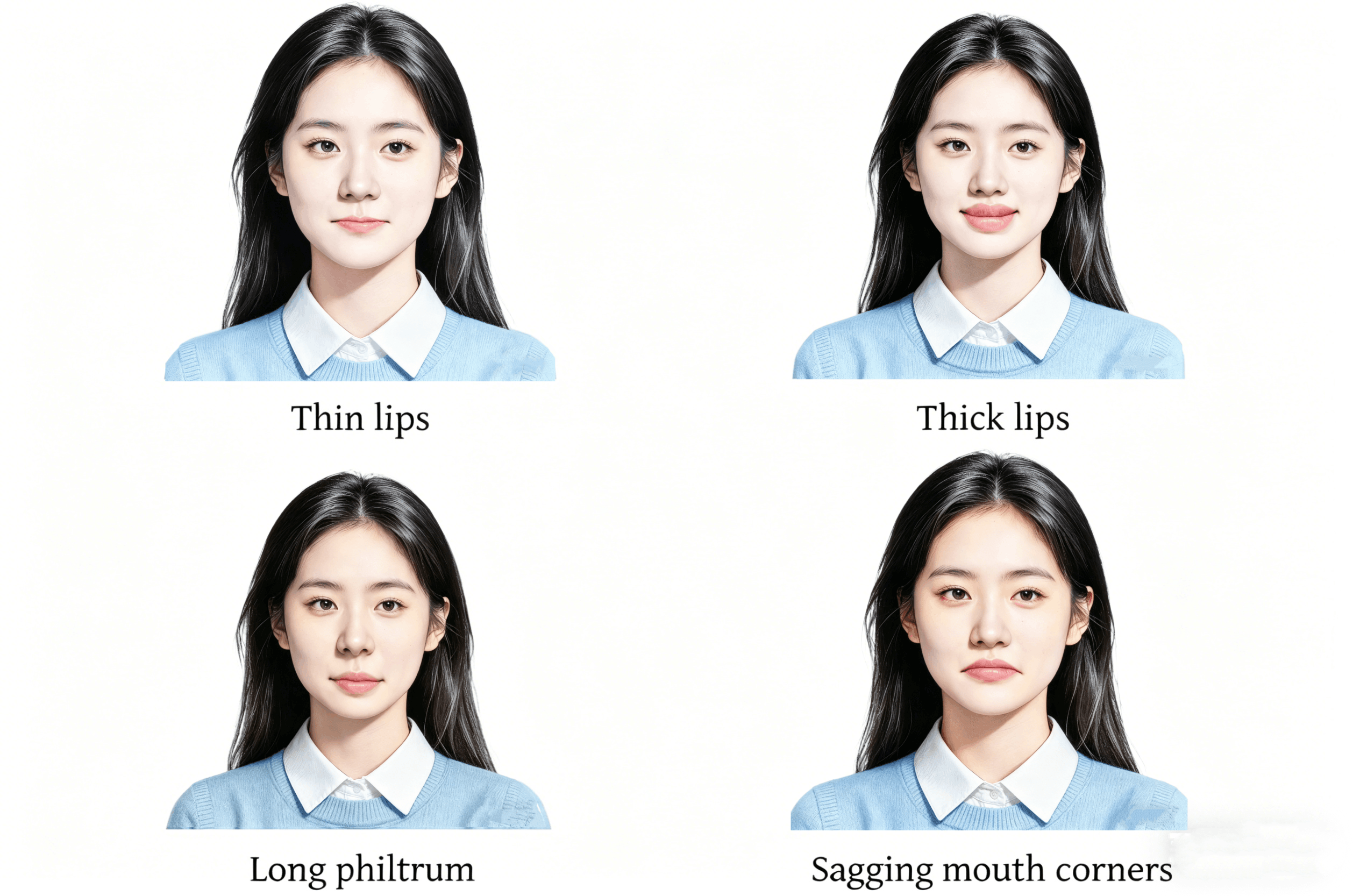
In the field of facial plastic surgery, lip cosmetic surgery requires high precision. Whether it’s lip lift surgery, cleft lip repair, or lip reconstruction surgery, even the slightest scar can affect the overall facial esthetics. Therefore, the method of wound closure is crucial for achieving the best cosmetic results.
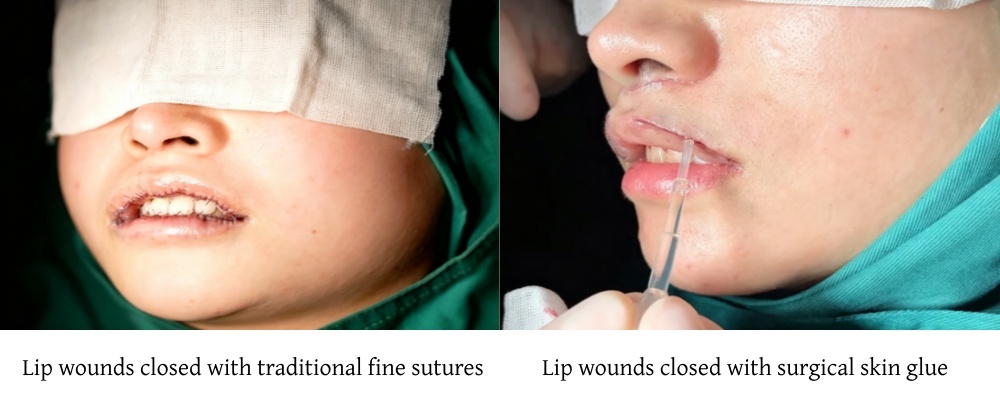
In lip plastic surgery, traditional lip incisions are usually sutured with fine threads. Although this can achieve tissue alignment, issues such as the suture removal period and stitch scars always affect the postoperative cosmetic results. The introduction of surgical skin glue (cyanoacrylate tissue adhesive) has provided a new option for wound closure in lip cosmetic surgery.
This cyanoacrylate tissue adhesives (surgical glues) like 2-octyl-cyanoacrylate and n-butyl-2-cyanoacrylate are effective alternatives or adjuncts to traditional sutures for skin closure. They are particularly popular in pediatric procedures, such as cleft lip repair, because they eliminate the need for traumatic suture removal and reduce operative time.
Overview of Lip Cosmetic Surgical Procedures Requiring Incision Closure
Lip cosmetic surgeries that can directly use tissue adhesives
Some lip surgeries only require incisions on the skin surface, with minimal tension, allowing for easy alignment of the wound edges without the need for deep suturing.
For example:
- Vermilion border lift
- corner mouth lift surgery(correcting drooping mouth corners)
- Superficial M shape lip correction (epidermal incision)
- Mild lip asymmetry correction (superficial skin incision)
- Partial cleft lip repair
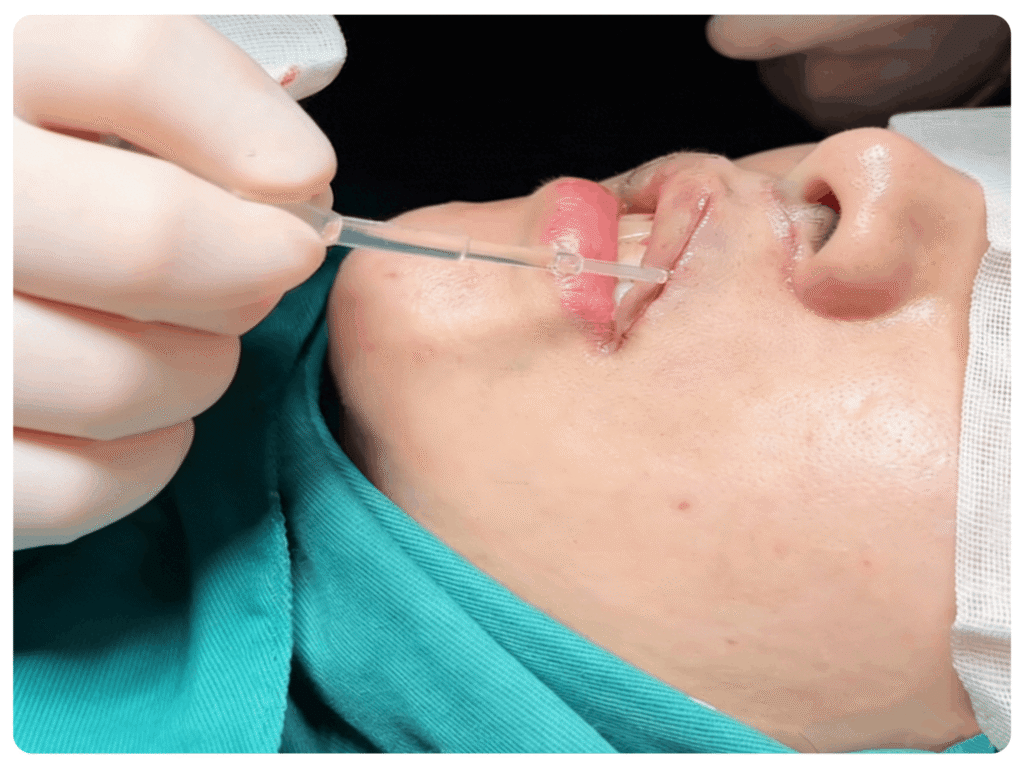
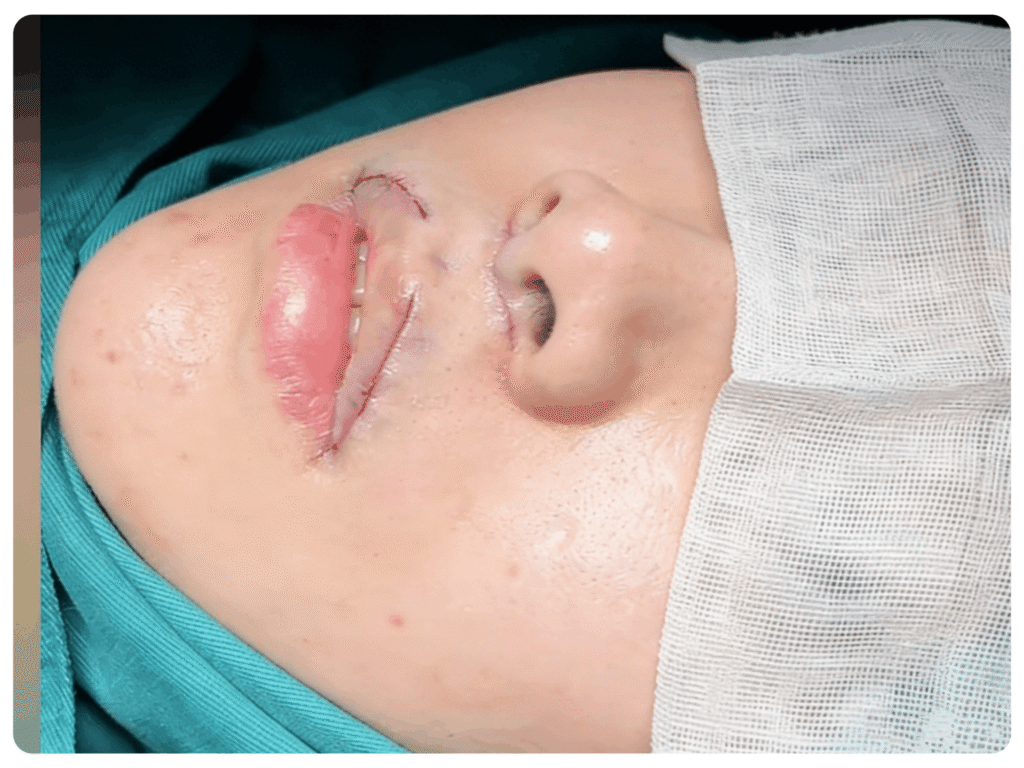
The Images of a surgeon using tissue glue to seal the incision for lip vermilion border lifting and philtrum shortening.
Lip cosmetic surgeries that require sutures followed by the use of tissue adhesive
Some lip surgeries involve deeper structures, such as subcutaneous tissue.
In these surgeries, lip surgeons typically first perform deep sutures to reduce tension, and then use tissue adhesives to seal the epidermal incision for improved cosmetic results.
- Lip lift (philtrum reduction requires tension-reducing sutures)
- Philtrum column enhancement
- Complex M-Lip Reshaping (epidermal closure after muscle layer suturing)
- Old scar repair (surface adhesion after layered tension reduction)
Image of the doctor using sutures and tissue glue to close the vermilion border elevation surgery incision
Lip plastic surgeries where tissue adhesives are not applicable
- Oral mucosal incisions (e.g., lip reduction procedure)
- Actively bleeding wounds
Tissue Adhesive VS Sutures in Lip Cosmetic Surgery
Item | Tissue Adhesive | Sutures |
Closure time | Faster | Slower |
Operating room efficiency | High | Low |
Need for removal | No | Yes |
Scar incidence | Low | High |
Patient comfort | Higher | Moderate |
Post-op care | Simple | Complex |
For doctors, skin glue can quickly close incisions, block bacteria and saliva, reduce the risk of postoperative infection, and improve operational stability and postoperative safety.
For plastic surgery clinics, using skin glue or skin glue combined with tension-reducing sutures to close surgical wounds offers four major advantages:
- Improved surgical efficiency: Shorten surgery time.
- Core competitiveness: No sutures needed, no needle marks, ideal for patients who fear pain and scarring.
- Reduce customer complaints: Good biocompatibility and an extremely low allergy rate help reduce postoperative allergies, and other customer complaints.
- High cost-effectiveness: Although the cost per tube of skin glue is higher than traditional sutures, it reduces the number of follow-up visits and improves patient satisfaction and reputation, resulting in a higher overall cost-effectiveness.
For distributors, these products have high clinical acceptance and stable repurchase rates, allowing them to enter the high-value cosmetic surgery industry and continuously generate stable profits.
The Key Criteria of Evaluating High-Performance Topical Skin Adhesives for Clinical Use
When selecting medical skin adhesive for lip surgery, clinics, hospitals, and distributors should evaluate several key product characteristics to ensure reliable wound closure, optimal cosmetic results, and patient safety.
Here are the three core dimensions for measuring high-performance wound skin glues for cuts:
Viscosity: Viscosity affects the controllability of wound skin glue on complex wounds.
Polymerization Speed & Exothermic Reaction: Balancing efficiency and safety.
A faster aggregation speed can effectively shorten the surgery time and quickly stop the bleeding.
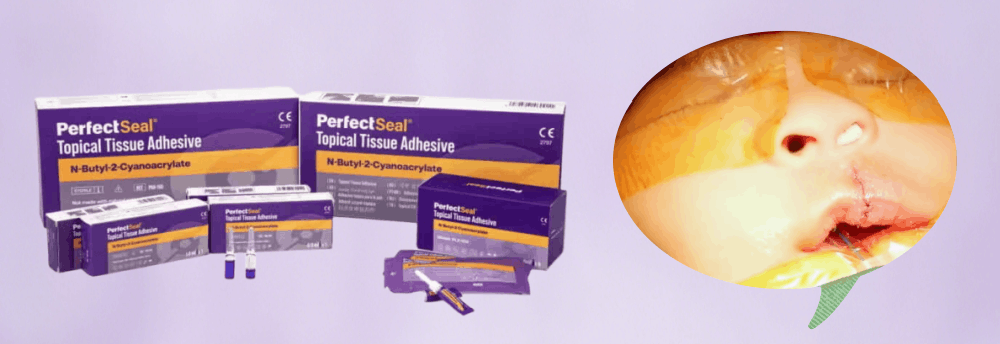
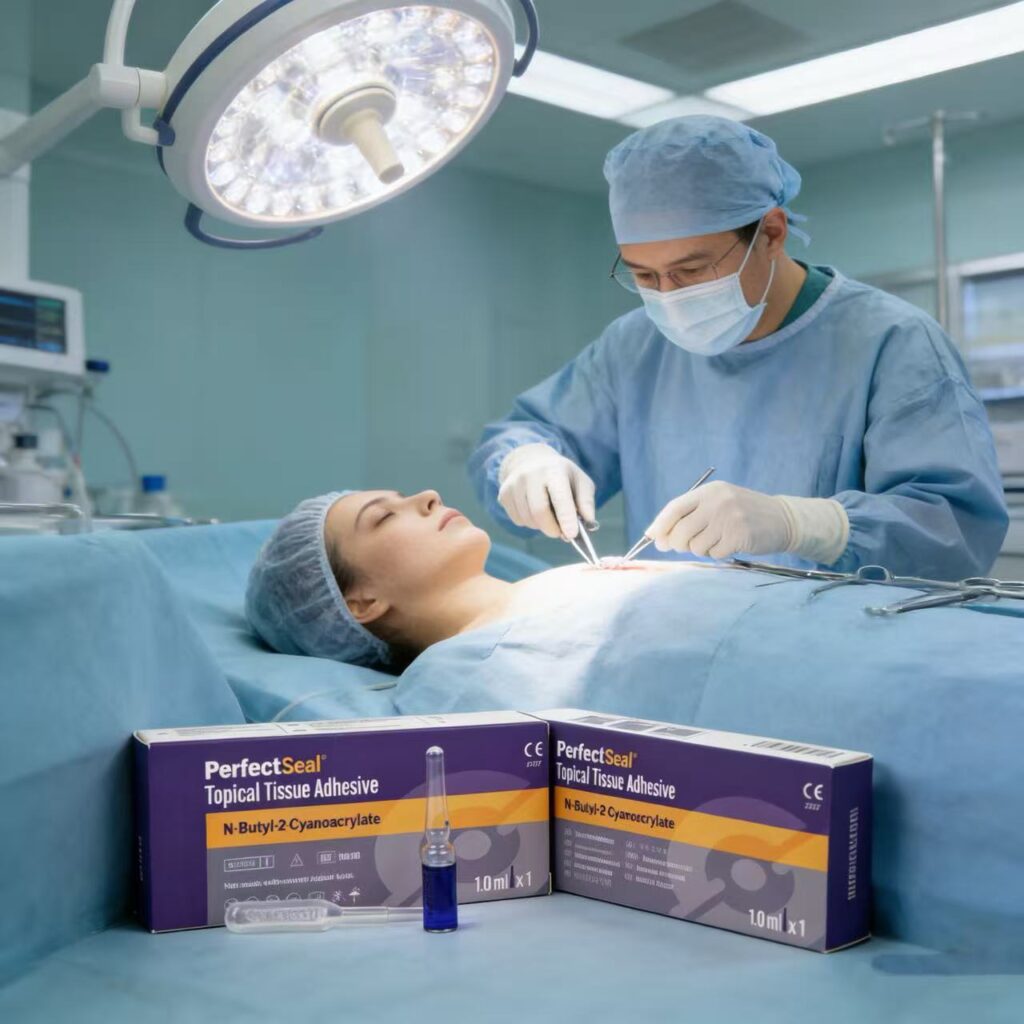
Tissue adhesives quickly cure when they come into contact with moisture or tissue, and high-performance skin adhesives (like PerfectSeal®) produce less heat as they harden, reducing pain and avoiding tissue damage.
Flexibility:
The lips are highly active areas, constantly moving when speaking and eating, so the adhesive’s flexibility after curing is particularly important.
A flexible adhesive layer can maintain wound closure and adapt to tissue movement, reducing the risk of wound dehiscence and enhancing patient comfort and postoperative recovery experience.